Table of Contents
Overall Context
‘Grief is the price we pay for love’
** ”Grief is the price we pay for love” is erroneously attributed to Queen Elizabeth; but the quote comes from a longer passage by Dr Colin Murray Parkes, a British psychiatrist and a pioneer in this field. The Queen popularized it, but Dr Parkes’ full quote is eloquent and wise and deserves to be acknowledged. The full quote can be found in his book, Bereavement: Studies of Grief in Adult Life.
“The pain of grief is just as much part of life as the joy of love: it is perhaps the price we pay for love, the cost of commitment. To ignore this fact, or to pretend that it is not so, is to put on emotional blinkers which leave us unprepared for the losses that will inevitably occur in our own lives and unprepared help others cope with losses in theirs.”
https://blog.aftertalk.com/inspirational-quote-9-24-15-grief-is-the-price/
‘Anticipatory Grief’
‘Anticipatory grief’ is a well described phenomenon that is found most commonly in the context of close relatives of patients admitted for terminal hospice care usually because of cancer. In this situation, carers have to come to terms with grief in the short time line of impending death before it happens, and there is an extensive literature on experiences, management and best support for affected families.
Yet there is another circumstance for ‘anticipatory grief’ that my research shows has just not been given the attention it deserves, leaving countless carers struggling to understand what is happening to them let alone being able to get support for their needs.
This is the plight of carers compelled to admit their much loved spouses and partners to long term residential care in a memory care home because of dementia that can no longer be managed at home. This is a ‘limbo land’ in which the resident is no longer the person she/he was, yet is physically still present though with uncertain longer term survival as the dementia causes the body relentlessly to lose its functions.
The purpose of this paper is to describe openly what has been happening to me in order to generate discussion and debate not least to increase awareness of the seriousness of anticipatory grief caused by dementia, and promote thinking on what should be done to address the needs of carers through the milestones of the journey. (Reflection 1 below)
I conclude with a series of thoughts and questions for further discussion alongside some possible actions to take.
Al’s Journey
My journey began on a bitterly cold Saturday evening in January 1965. I was a penniless 4th year medical student at a famous London teaching hospital on my way to the social event of the week, the regular student ‘hop’ in the Student’s Union, this being the place for romantic encounters between young medical students, nurses, physiotherapy students and others.
On entering the heaving dance floor I saw across the room a stunning, elegant young woman, a student nurse, talking to her friends. She had long fair hair with sparkling blue eyes perfectly matching her pale blue figure-hugging woollen dress alongside her cute bright red ballerina shoes. Our eyes locked as I walked to her; she agreed to dance with me showing an amazing ‘wiggle’ as she did so. I was hopelessly smitten and six months later after many dates I asked her to marry me. This she agreed to, we were engaged to marry at the end of the year and were married after I had graduated as a doctor in 1967. We committed ourselves to each other though the beautiful words of Cranmer’s marriage ceremony ‘to love and to cherish in sickness and in health ‘till death us do part’.
This was the start of our passionate 57-year love story that has endured to this day. During this we have had the most wonderful mutually supportive relationship, highlights being the birth of our two beautiful baby girls, their childhood and subsequent marriage themselves followed by the birth of our six inspirational grandchildren; my successful high-profile career in public service culminated in an investiture as a knight of the realm by HM the Queen, and much red-carpet international travel to medical centres and universities world-wide. My wife has been by my side throughout, sharing my life and experiences, her boundless common sense supporting me in the challenges of my professional career, always providing a haven for me to return to full of love and mutual respect. We also survived tough times caused by breast and prostate cancers, our resilience being due to our tested interdependency.
Living in a high achieving family depending for our success on our brains, we had always feared the possibility of developing dementia (the unmentionable fear-inducing ‘D’ word) as our silver years approached.
The first worrying symptoms emerged at the start of our 50th Golden Wedding anniversary year as we began preparing a celebration through some world-wide travel although dithering somewhat over the cost and whether we could really afford it. (Reflection 2)
She mentioned in passing to her GP when attending by herself for an incidental minor condition that she was experiencing some difficulty in finding words alongside a loss of sense of smell. He promptly bounced on her with no preparation the ‘ten-minute GP screening test for dementia’, concluding that she needed to be referred to a memory clinic to assess possible dementia.
The impact of this consultation was devastating for her being panic stricken in realising she couldn’t do many of the tests of memory. No information was provided on what would happen to her at a memory clinic visit, our understanding from colleagues was that this could be quite a challenging encounter over several hours with detailed scrutiny of all aspects of her cognitive competence. (Reflection 3)
She refused to go. A decision I supported not least because of our imminent international travel. On returning home she did agree to a brain CT scan that showed generalised thinning of her brain cortex the conclusion being that this was early vascular dementia associated with a long standing irregular heart rhythm, atrial fibrillation, despite being on blood thinning drugs.
Two years ago I was found collapsed on the floor at home by my daughter and granddaughter and admitted forthwith to our local hospital where Covid 19 was diagnosed, the severity of my symptoms leading the staff to tell my family that I might well not return home. By this time my wife had developed further dependency on me and was devastated by my sudden disappearance highlighting the significance of a carer being admitted to hospital. No serious enquiry was made of my social circumstance in hospital and no enquiry was made on discharge of the need for any support that would be needed. (Reflection 4) The experience triggered a child-like separation anxiety in her on my return home.
A few weeks later she developed ‘red flag’ symptoms of blood in her urine. After complex investigations across three hospitals including some under anaesthesia she was shown to have a rare transitional cell cancer in her ureter, the tube between her kidney and bladder.
Using my medical contacts I was able to access one of the country’s best kidney cancer surgeons and he kindly agreed to take over her care that would involve the removal of her kidney and ureter through major surgery.
In our first conversation he told me that because of his hospital’s Covid policies to prevent infection I would not be allowed to be with my wife during her admission, being told I would have to leave her at the door to face surgery entirely unsupported.
I was incandescent to be told of this unspeakable cruelty and argued that I was a doctor well used to intensive care precautions and surely, by rigorous self-isolation for two weeks before admission coupled with negative swab testing for Covid 48 hours before I could safely be with her? Furthermore, I argued that I wasn’t a casual ‘visitor’ but a registered ‘carer’ who could add value to the ward team looking after her. He said he would do what he could but couldn’t promise I’d be allowed in.
On the morning of admission I was told by the ward receptionist that I couldn’t go in, but on challenging this robustly eventually I was let in though at considerable emotional cost to us both.
I was able to prove my value by keeping her calm on the way to surgery, being there to love her when she came round from the anaesthesia, and to encourage her drinking to establish a good urine flow in a way the very busy nurses couldn’t do. We were able to go home two days earlier than expected by proving the value of a carer being a full member of the team looking after the patient.
I have written and broadcast on this unspeakable cruelty of denying access to loved ones by carers as a result of the ‘Covid says no!’ mindset that has destroyed the fundamental principles of the NHS in compassion, flexibility and the best interests of patients driving practice.(Reflection 5)
- It is inhumane for carers to be barred from hospitals – https://www.thetimes.co.uk/article/it-is-inhumane-for-carers-to-be-barred-from-hospitals-rqtgbgvp6
- Kept apart – the price of beating COVID – https://www.bma.org.uk/news-and-opinion/kept-apart-the-price-of-beating-covid
Either coincidentally or causally due to changes in brain blood flow during complex surgery alongside powerful pain relieving medication, her dementia rapidly deteriorated after returning home. It was suggested by the memory clinic that a radioactive scan would be useful to explore further the reasons for her dementia, but we refused, arguing that this was the medical model of ticking the computer check list with no benefit in any effective treatment as a result (Reflection 6)
During the next few months my family and I tried our very best to cope with the relentless demands of her dementia. Of greatest challenge was the loss of my sleep being continuously ‘on edge’ because of nocturnal wandering and unpredictable faecal incontinence.
We explored trying to buy help at home, but this proved to be challenging not just in cost, but in finding and coordinating the skills for her complex needs. At the point of carer burnout in me, we were forced to consider the unpalatable admission to a memory care home despite my marriage vows. (Reflection 7)
We then entered the swamp of finding one to meet our needs hearing on the way of the chaos and mayhem in care home provision with many operating entirely for profit with temporary staff from agencies. The public perception of appalling care homes was reinforced by television reports showing dementia patients wearing carpet slippers sitting in circles in ill matching high-backed chairs in front of a blaring television screen and probably smelling of urine.
Through due diligence by my daughters on what was available locally supported by an exceptionally empathetic memory nurse, we were fortunate to find a brand new selective care home purpose-built by an owner committed to provide the care his own mother would need were she to develop dementia. https://elmfieldcare.co.uk Her care is outstanding in every way with exceptional staff, every one of which is hand selected for compassion and commitment to the best care for people with dementia; her care undoubtedly is facilitated by her ‘contented dementia’ personality. (Reflection 8)
However, I was completely unprepared for the practicalities and emotions of admitting her. No one had sat down with me to explain them nor to set out a probable long-term plan other than to tell me that she would be cared for to end of life in the home. This was immensely reassuring but I was ‘on my own, Jack’ to explore through the internet the likely progression of her illness with key milestones being forgetting how to eat, loss of appetite and weight, eventually forgetting how to walk with increasing sleepiness before finally taking to her bed. No one has sat down to explain how this would be managed let alone how anyone would help me to cope with the inevitable ‘second’ death. (Reflection 9)
The day of admission was profoundly challenging despite having visited the home with her beforehand, meeting staff and enjoying a meal there before fitting out her room with her personal belongings and family photographs. She was unable to understand what would be happening to her and I felt an overwhelming sense of betrayal like Judas Iscariot as I took her by the hand, trustingly, to admit her. I was advised that it would be best for me not to visit for up to two weeks to allow her to ‘settle’. I found this to be exceptionally hard to take. (Reflection 10)
I was distraught returning to our cold, empty home that evening, missing her dreadfully, and the next few days were a blur of sorrow. Unable to sleep in our now empty bed, loss of appetite and deep lethargy characterised my existence. Unexpected scalding tears caught me out on seeing the watch I had bought for her on the bedside table where she had left it; precious photographs around the house; her clothes hanging in her wardrobe; her perfume smell of her dressing gown behind the bathroom door all conspired to make me miserable alongside seeing how our daughters and grandchildren, especially the girls, together with my sister were affected too. (Reflection 11)
I found no solace in religion, my life-long gentle Anglican belief being shattered into a thousand pieces in trying to reconcile the existence of a loving God in the face of my precious wife’s undeserved suffering. Senior clergy were unhelpful – ‘read the Book of Job in the Old Testament and hang on to the 23rd Psalm’ alongside the comment that ‘there’s no problem in trying to reconcile this if you don’t believe in God’ was the sum total of solace and comfort offered by very senior clergy to episcopal level. (Reflection 12)
As an academic throughout my life I researched the literature on the stages of grief generally and on anticipated grief specifically and contacted the help lines of leading dementia organisations, some proving more empathetic and helpful than others. The most important step forward was to have a session with a wonderful psychotherapist, crucially allowing me to talk openly of what I was experiencing. (Reflection 13)
Three key pieces of advice emerged: first, take time and not make decisions e.g. selling our home to downsize until events move on; second, seek personal fitness and health to sustain resilience; third, review my life to see what I’ve really enjoyed and from this find a new meaning and purpose in life. I have tried my best to follow these recommendations.
So, where am I now five months after her admission?
Whilst there is deep relief that she is being so well cared for with responsibility for it no longer being mine, nonetheless, overwhelming guilt, sadness and loneliness dominate my life with the devastating realisation I no longer have my soulmate with whom to share our daily experiences and to plan for our future. This, the most searing consequence, makes it difficult to celebrate and be grateful for the memories of the wonderful lives we have led.
My beloved wife lives in a world of her own that no one can understand. She has no memory of the journey described above – of our courtship and marriage; of her babies; our life together; of our travel worldwide.
After her admission and my initial disappearance from her life to allow her ‘to settle’ she no longer recognised me or our daughters. More recently a spark has returned – she recognises my voice and smiles in anticipation of a hug and a kiss. I have taken to visit her every day in the afternoon where we lie down together, when she goes into a deep restful sleep clutching my hand. Is this wise or not I wonder? I’m advised that I should maintain this spark because once it has gone it will be gone for ever. Nonetheless I often weep seeing her lovely face sleeping next to mine being fearful of the next steps in our journey together when I will have to face the reality of her death.
As her Majesty the Queen so perceptively said at the time of the twin towers attack in New York, ‘Grief is the price we pay for love’. How true! But how I wish it were otherwise.
What are the key reflections and messages from the narrative of my journey through anticipatory grief? What can be learned and how might others be supported and encouraged from this?
Reflections
Reflection 1) from my experience over >40 years in seeing how children’s services are bedevilled by ‘bunkers and silos’ I am persuaded with hard evidence of the benefit that follows designing services by the construct of the ‘journey’ through adversity, i.e. it’s milestones and considering at each the needs – of the person, the carer and family and of the staff.
This can be transformational in thinking, but I’m also aware of the huge difficulty in getting staff, especially those who should be leaders, to recognise and even pilot the model where they work being constrained by ‘we’ve always done it this way!’ alongside the bunkers caused by professional territory, influence, funding, and profile.
I argue that continuous improvement could continue even in the wonderful home she is now in if there were better focus on the needs of the carer. To whom can one turn for counselling and practical advice?
Action 1: Encourage staff to see services through the lens of the journey through dementia and re-design them focussing on needs. Providing information is key – should every new resident’s carer be given a pack of information on what to expect and to whom to turn?
Reflection 2) ‘Carpe Diem’ – seize the day! should be one’s living mantra. No one can ever be sure that there isn’t something nasty around the corner. I’m so pleased we spent our money going around the world in our Golden Wedding year giving me precious photographs and memories.
Action 2: Embed the ‘seize the day’ attitude in everyday personal life.
Reflection 3) How the first contact with a medical practitioner, usually a family doctor, is handled needs much greater scrutiny. Is it right for the ’10-minute dementia test’ to be done unsupported without any preparation in a busy practice? Is better training needed for GPs to understand the impact of their actions? And should there be much greater information available to patients from memory clinics on process, diagnostic tests, and support?
Action 3: Generate discussion on the role of primary care as first point of contact when suspicion of dementia is first raised. Is the GP screening test always appropriate? When should such patients be referred to professional memory staff? Research is needed on the impact of current practice.
Reflection 4) The impact of a carer being admitted to hospital on the needs of the cared for person in my experience is just not adequate. How will the vulnerable person be cared for when the carer is in and then out of hospital?
Action 4: The key difference between children’s and adult services is that in the former the child’s management is always considered in the context of the family. This is not the case in adult service culture, and this needs to be challenged robustly.
Reflection 5) I fear that so much government policy is dreamed up by officials completely out of touch with the real needs of real people. How could the ‘unspeakable cruelty’ of the denial of access to loved ones in care and NHS settings have been allowed to be implemented? Carers must be seen not as ‘visitors’ but full members of the team looking after the person. I’m sorry to report how little support I’ve received from my own profession on confronting their ‘Covid says no!’ mindset.
Action 5: The insidious indoctrination that access should be restricted has to be challenged at the national level, through professional organisations and at local levels. The size of the mountain to climb cannot be underestimated, and individuals facing denial should, in my opinion, challenge directly the CEO of the organisation and not be dissuaded by middle ranking managers. I propose that any carer who is registered as such, especially as an essential care worker, who has a Lasting Power of Attorney and who understands infection prevention alongside use of negative PCR and lateral flow tests should be allowed access to contribute to the patient’s care.
Reflection 6) The ‘medical model’ driving investigations for dementia is in my opinion driven in turn by the ‘tick box’ computer algorithm and not always by the best interests of patients. The reality is that at present there are so few options for intervention and treatment that it makes, as in our case, radioactive scanning unnecessarily meddlesome.
Action 6: The medical ‘tick box’ mentality must be challenged in deciding what is in the best interests of the patient when considering tests and investigations especially when invasive. The availability of a Lasting Power of Attorney by carers is fundamentally important in challenging at times the medical enthusiasm that because tests are available, they should be used! What benefits will follow from the test must be the key question for carers to ask.
Furthermore, the impact of hospital attendances and tests on people with dementia must not be underestimated. There is hard evidence too, that anaesthesia and surgery may accelerate cognitive decline and surgical teams should be challenged to recognise and ameliorate this.
Reflection 7) Carer burnout is real, as I can attest to. Its characteristics are well described, the most powerful driver for it being chronic lack of sleep.
Recognising it is happening is the first step in addressing it alongside respite care, but admission to long term care may be necessary though this generates further emotional challenges.
Action 7: Services supporting people with dementia should be alert to the possibility of carer burnout by routinely making appropriate enquiry and offering support with early intervention.
Reflection 8) There is a powerful, near impenetrable swamp confronting carers seeking a care home placement, not least because every individual situation is different and there is a ‘post code’ lottery in what is available in localities. It may also be very difficult to get hard facts on an organisation’s ethos and culture, its governance and financial underpinning. The ’Wild West’ of care home funding has been exposed by the BBC.
Undoubtedly the Care Quality Commission’s inspection reports are invaluable, but these do not really give the full picture of the ‘lived experiences’ of residents who may be unable to express their views.
Action 8: Seeking the best care home that is suitable is a daunting task, and memory clinics are best placed to be able to advise. Demanding information on ethos, funding, feedback and values should be available for every home. Key principles in looking are well described in web sites e.g. that from Age UK and the Care Quality Commission.
- Age UK (Choosing the right care home for you) – https://www.ageuk.org.uk/information-advice/care/arranging-care/care-homes/choosing-care-home/
- Care Quality Commission (How to find a care home) – https://www.cqc.org.uk/what-we-do/services-we-regulate/find-care-home
Reflection 9) The reality of having to face in due course the final days of a much loved partner is daunting. Yet, getting advice on how to handle this is very difficult to access. Local advocacy and carer support organisations are key, yet provision is patchy and under immense strain depending as so many do on volunteers offering their services.
Action 9: Access to end of life care and what to expect can be found in the web sites of organisations in the dementia and old age sectors. Care homes themselves have a key role to play in providing local information and support to carers.
Reflection 10) The transition into a care placement is hugely challenging to carers and new residents alike, and there must be room for the individual tailoring of needs of both to process. I’m not persuaded that the advice not to visit was best for us because my wife did not recognise me when I returned. Others have described an incremental staging of disengagement.
Action 10: There is no ‘one size fits all’ for the process of disengagement, and carers should demand discussion on what is best and available in the home.
My attention has also been drawn to the fact that not all new residents are ‘loved ones’, with huge problems having been created in some by aggressive and inappropriate behaviours and fraught family relationships before admission. For these reasons it has been suggested that the phrase should not be used. My dip stick question whether this is right to my internal family reference group and to a small number of staff is that this direction is ‘woke-ism’ gone mad with political correctness in not wishing to offend anyone thereby devaluing the huge emotional power of the phrase for those relatives who really do love their life-long partners. It also devalues the genuine love shown by staff to their residents.
In the light of my life’s work with children, I am disconcerted to hear of the low profile of thinking about the needs of children and young people in families especially with early onset dementia. What is it like to lose a parent to mid-life searing dementia? Who cares?
Certainly, the childhood bereavement organisations seem oblivious to their distress. Furthermore, some may be the sole young carers of such family members, yet I’ve found little if anything on research for policies to support their needs. How can we get their voices listened to and heard?
Action 10a: Much more thinking about and research into the impact of dementia on children and young people in families is urgently needed. With an estimated prevalence of early onset dementia to be affecting 46,000 patient or more it is likely that several thousand children and young people are currently affected.
Reflection 11) The devastating realisation of loss after leaving my wife in the home was very difficult to manage, being able to talk about it openly with emotionally intelligent close friends proved to be very relevant.
Action11: Information on what to expect on leaving a loved one in a home should be provided to carers by the home.
Reflection 12) ‘The Anglican Church doesn’t do dementia’ is a phrase I’ve heard from several quarters. If this is the case, then why so? The irreconcilability of the existence of a loving God in the face of undeserved suffering is a centuries old challenge that theologians have struggled with and is especially pertinent to the current circumstances of several thousand people dying from Covid 19.
My grandson, having travelled and lived in Nepal has drawn my attention to the Buddhist faith and the writings of the Dali Lama in which there is no belief in the existence of a supernatural, magical deity. Suffering is seen to be an essential part of human existence, the way to address it being through compassion and helping others thereby striving to achieve a personal Nirvana. Research into the role of faiths in managing dementia would seem to be a fertile area for study.
Action 12: National and local debate is urgently needed to examine the role, resources, understanding and impact of faith organisations in supporting carers and families. Improved training of clergy and practitioners is, in my view, urgently needed.
Reflection 13) Access to an empathetic highly professional psychotherapist has been key to my resilience in recent weeks. Yet access to such expertise is rare and countless people struggle to make sense of their emotions.
Action 13: Information should be available through care homes and memory clinics on how carers can best be supported.
Final thoughts
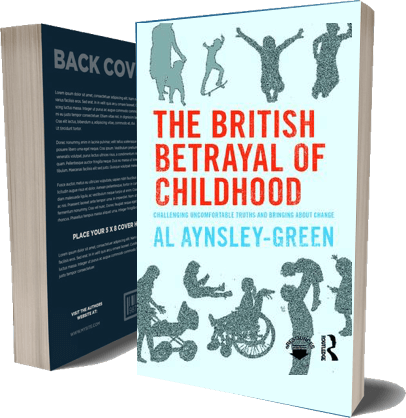
I have spent all my professional life working with and for children with my experiences and conclusions being distilled in my best selling and award-winning book ‘The British Betrayal of Childhood’.
The dismal public attitudes to the importance of children; political policies for them being short term and inconsistent; the failure of effective political advocacy for their best interests by leading organisations in the sector and, finally, the existence of silos and bunkers within and between organisations from central government to localities all conspire to our children having some of the worst outcomes in the developed world – and that was before the devastating impact of Covid in which children have been disproportionately disadvantaged.
I am struck by the resonance of these to the dementia sector. I have now met many truly wonderful people working within it showing real compassion, care, and love for their work, including the stunning example of the Admiral nurses.
Yet I hear of a lack of status for what care staff do; an absence of any structured training and career progression coupled with appalling low pay that compels many to depend on a partner’s second income to pay for the costs of childcare, travel, and subsistence. Why has there been such an appalling lack of political advocacy within the sector to demand the very best focus, resources, and policies for dementia care? What would an alien from Mars say about the siloed sector?
Challenge: Hasn’t the time come to do something different in a coordinated and powerful way to transform the situation? Politicians must understand that the burden of dementia care on society will inexorably increase in coming years as our population ages.
Final Action: If what I’m saying in this paper has any relevance to you, the reader, then what are you going to do about it?
And if you are caring for a loved one, take comfort. You are not alone!
Professor Sir Al Aynsley-Green Kt.
Former first Director of Clinical R&D, Great Ormond Street Hospital for Children NHS Trust.
First National Clinical Director for Children, Dept of Health.
First Children’s Commissioner for England.
Past president, British Medical Association.
Copyright Aynsley-Green Consulting January 2022
Disclaimer:
The opinions in this piece are my own and are true to the best of my knowledge; if there are any inaccuracies then please let me know so that they can be corrected.
Some key agencies:
1) Dementia UK: https://www.dementiauk.org
2) Alzheimer Society https://www.alzheimers.org.uk
3) Dementia care matters: https://www.dementiacarematters.com
4) Relatives and residents: https://www.relres.org
The love of my life
Soon after we first met in 1965: Elegant, sophisticated, self-confident, a wonderful wife, mother, and grandmother; my life’s companion, a pearl beyond price.